Budget Categories List: What to Include in Your Budget
A good budget starts with a good list of categories. If a cost is missing from your list, it will still happen, and it will show up as a surprise. Below is a practical list of ten main groups, with specific line items inside each. Use it as a checklist: delete what does not apply to you and add what is missing.
How to use this list
- Read each group and mark the items you actually pay.
- Write an amount and how often you pay it (weekly, monthly, quarterly or yearly).
- Convert everything to the same period, such as per paycheck. The method is in how to budget a paycheck.
- Add anything personal that is missing.
1. Housing
- Rent or mortgage payment
- Property tax, if not paid through escrow
- Homeowners or renters insurance
- HOA dues
- Lawn care, snow removal or pest control
- Home repairs and maintenance
- Appliance and big-ticket replacement fund
- Moving fund or security deposit
2. Utilities
- Electric
- Natural gas or heating oil
- Water and sewer
- Trash and recycling
- Internet
- Cell phone plan
- Seasonal fuel such as propane or firewood
For bills that change by season, use a twelve-month average rather than your best month.
3. Food
- Groceries
- Warehouse club runs, kept separate from regular groceries
- Dining out
- Coffee shops
- Takeout and delivery
- Work and school lunches
Small leaks add up here, which is why many people give food two or three separate lines instead of one.
4. Transportation
- Car payment
- Gas
- Car insurance
- Registration and inspection
- Oil changes, tires and repairs
- Parking, tolls and public transit
- Rideshare
Registration, tires and inspections come up once a year or less, so they are good candidates for a yearly bucket.
5. Insurance and health
- Health, dental and vision premiums, if not deducted from your paycheck
- Life and disability insurance
- Pet insurance
- Doctor copays and prescriptions
- Dentist and eye exams
- Glasses or contacts
- Therapy or counseling
6. Debt
- Student loan payment
- Credit card minimums
- Extra payment toward a credit card
- Personal loan
- Medical payment plan
- Buy now, pay later installments
If you are paying down more than one debt, see the debt snowball vs avalanche comparison.
7. Savings and goals
- Emergency fund
- Retirement contributions beyond your paycheck deductions
- College savings
- House down payment
- Car replacement fund
- Vacation fund
8. Personal and family
- Child care and after-school programs
- Kids' clothing, activities and school fees
- Pet food, grooming and vet visits
- Clothing and shoes
- Haircuts and personal care
- Fun money for each partner
- Books and courses
- Charity or giving
9. Subscriptions and memberships
- Streaming video and music
- Cloud storage
- Software and apps
- News and magazine subscriptions
- Gym membership
- Warehouse club or roadside assistance membership
- Domain or website hosting
A quick look at your bank statements often turns up a subscription you forgot.
10. Annual and seasonal costs
This is the category most budgets leave out, and the one that causes the most surprises.
- Holiday gifts, meals and travel
- Birthdays and anniversaries
- Back-to-school supplies and summer camp
- Vehicle registration and driver license renewal
- Tax software or a tax preparer
- Estimated quarterly taxes, for self-employed people
- Professional license renewals
- Weddings and showers you are invited to
A yearly cost is easiest to handle by dividing it across your paychecks. See sinking funds categories and examples for a more detailed list.
Choosing your own categories
You do not have to use all ten groups. Some tips:
- Match your life. A household with kids needs different groups than a single renter.
- Separate what you want to control. If you want to spend less on dining out, give it its own line instead of burying it in food.
- Keep fixed and flexible costs apart. Rent does not change; groceries do. Seeing them separately makes decisions easier.
- Add a small buffer. A line for the unexpected prevents one surprise from breaking the whole plan.
A library you can copy from
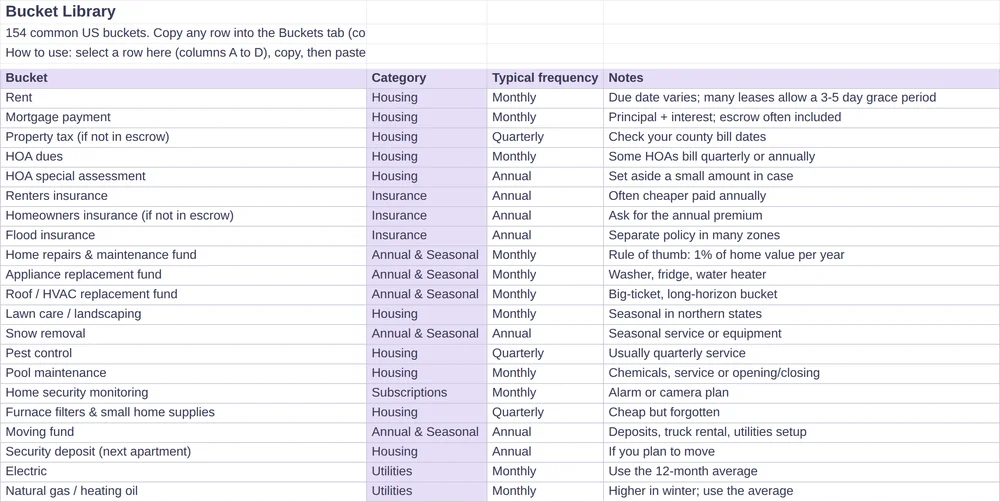
Writing your own list from scratch takes time. Bucket Budget Planner includes a Bucket Library with 154 common US buckets in ten categories (annual and seasonal, housing, utilities, food, transportation, insurance, debt, savings, subscriptions and others), each with a typical billing frequency and a short note. You copy the rows you need into the Buckets tab and type your own amounts. The sheet then converts each bucket to a per-week, per-paycheck, per-month and per-year amount, and the Dashboard charts where your money goes.
Couples can use the included Household & Couples Budget, which splits shared buckets either evenly or in proportion to each partner's income. For more on that, see the budget template for couples. To see how categories become buckets, read what is bucket budgeting.
This guide is general information, not financial advice.