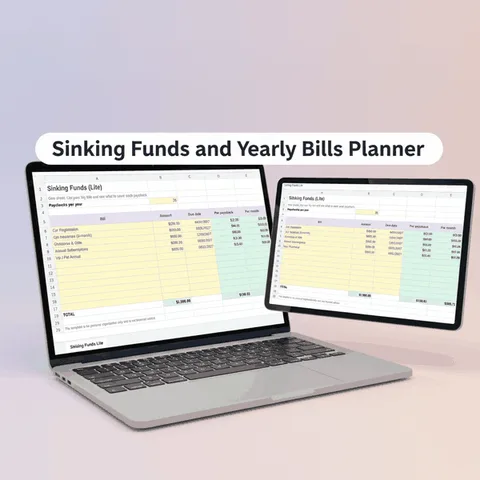
A sinking fund category is just a named bucket for an expense you can see coming. Here are the most common ones, grouped by area of life, with notes on how often they come up. Pick the ones that match your household, and skip the rest.
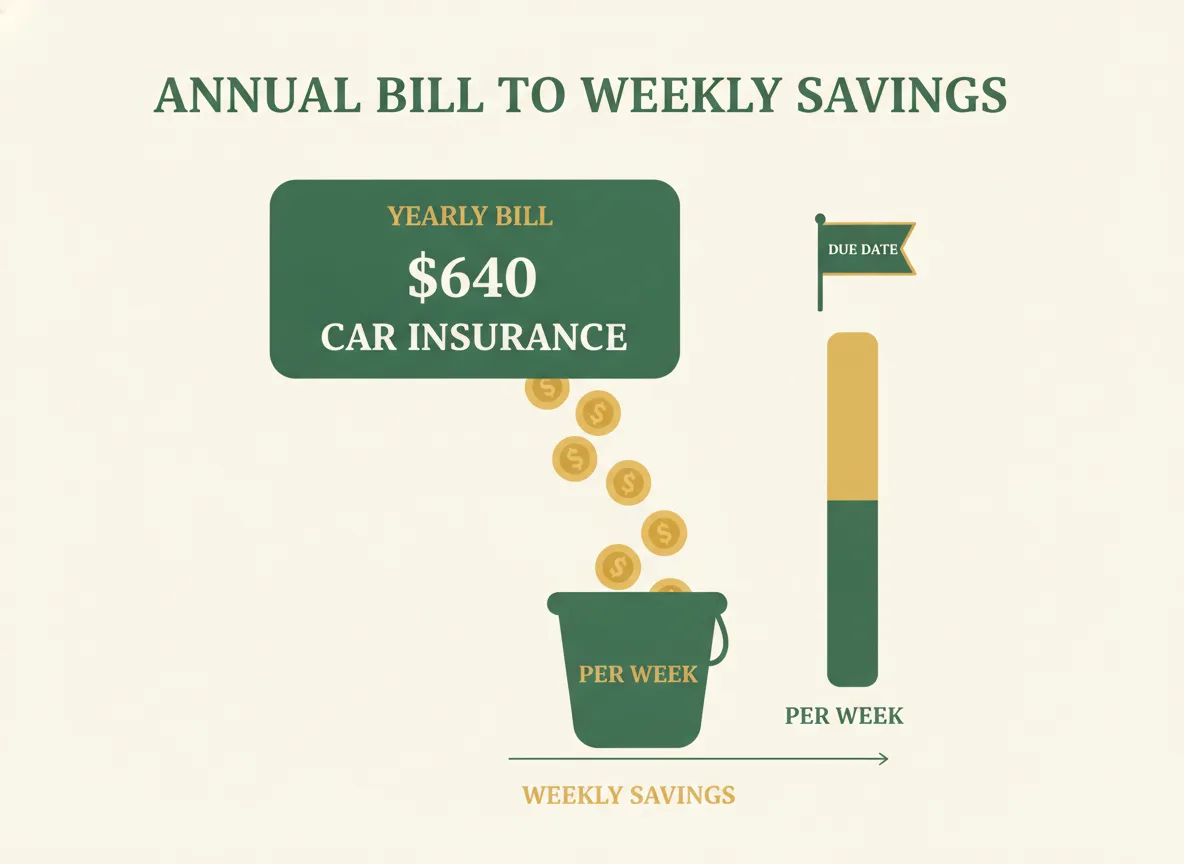
If you are not sure how a sinking fund works, start with what are sinking funds. The short version: divide the cost by the number of paychecks before the due date, and set that amount aside each time you are paid.
Car and transportation
Fund
How often
Notes
Vehicle registration
Yearly
Renews at a fixed time in many states
Inspection or emissions test
Yearly or every two years
Required in some places
Car insurance (if billed every six months)
Twice a year
Use the yearly total
Oil changes
Quarterly
Depends on mileage
Tires
Every few years
Divide the cost by the years between replacements
Repairs and maintenance
Ongoing
A monthly amount keeps a cushion
Next car fund
Long term
For the eventual replacement
Driver license renewal
Every few years
Divide by the number of years
Home
Fund
How often
Notes
Home repairs and maintenance
Ongoing
Small repairs happen every year
Appliance replacement
Occasional
A washer, fridge or water heater will eventually fail
Roof or HVAC
Long term
Large, so start early
HOA special assessment
Occasional
Some associations bill extra
Pest control or lawn care
Quarterly or seasonal
Depends on the service
Moving fund or deposit
When planned
Truck rental, deposits, utility setup
Home decor and furniture
Planned
Avoids putting purchases on credit
Insurance and health
Fund
How often
Notes
Annual insurance premiums
Yearly
Renters, homeowners, umbrella and pet insurance
Medical deductible cushion
Yearly
Depends on your plan
Dentist
Twice a year
Cleanings and any follow-up work
Eye exam, glasses or contacts
Yearly
Contacts may be replaced more often
Prescriptions and copays
Monthly
Useful when costs vary
Family and pets
Fund
How often
Notes
Back-to-school supplies
Yearly
Late summer spike
School fees and field trips
Yearly
Per child
Summer camp
Yearly
Deposits may be due in spring
Kids' clothing
Quarterly
Growth spurts
Vet checkup and vaccines
Yearly
Per pet
Pet boarding or sitter
Yearly
Travel and vacations
Pet license
Yearly
City or county fee
Holidays and celebrations
Fund
How often
Notes
Holiday gifts
Yearly
Start in January so December is calm
Holiday meals and decorations
Yearly
Easy to overlook
Holiday travel
Yearly
Flights, gas and lodging
Birthdays
Yearly
Gifts and parties
Anniversary and Valentine's Day
Yearly
February
Mother's and Father's Day
Yearly
Cards and gifts
Weddings and showers you attend
Occasional
Gifts, travel, outfits
Subscriptions and memberships
Fund
How often
Notes
Warehouse club membership
Yearly
Annual fee
Roadside assistance
Yearly
Annual membership
Software and domain renewals
Yearly
Billed once a year
Streaming or app annual plans
Yearly
If you choose to pay annually
Work and taxes
Fund
How often
Notes
Tax software or tax preparer
Yearly
Paid at filing time
Estimated quarterly taxes
Quarterly
Self-employed people
Professional license renewal
Yearly or every few years
Depends on the field
Work clothes and uniforms
Yearly
Seasonal
Fun and personal
Fund
How often
Notes
Vacation
Yearly
Flights, lodging and spending money
Phone upgrade
Every few years
Save before the device dies
Hobbies and big purchases
Planned
Equipment, courses
How to choose your funds
Look at the past year. Scan your statements for charges that were not monthly. Each one is a candidate.
Check the calendar. Write each one on a calendar by month. The 2027 bill calendar has room for this.
Estimate the yearly total. Use last year's amount plus a small margin.
Divide by your paychecks. A yearly 520 across a biweekly schedule of 26 paychecks is 20 per paycheck.
Start with the three that have hurt most. Add the rest over time.
Can you combine funds?
Yes, with a trade-off. One "car" fund is simpler than five. Separate funds show exactly what each one needs. A common compromise is to group items that are due at the same time or are small. For example, a "pets" fund can combine the vet visit, license and grooming.
Where this fits in a budget
Sinking funds are one type of bucket. In Bucket Budget Planner, each of these is a bucket with an amount and how often it is due (weekly, biweekly, semi-monthly, monthly, quarterly or annual). The Buckets tab converts it to a per-week, per-paycheck, per-month and per-year figure. The Bucket Library has 154 common US buckets, and 36 of them are annual and seasonal costs such as registration, holiday gifts and tax preparation, ready to copy. The included web app also has a Sinking Funds Calculator, where you enter a goal, how much you have saved and a target date, and an Annual Bills Calendar that places yearly and quarterly bills by month.
This guide is general information, not financial advice.
Frequently asked questions
What are good sinking fund categories to start with?
Start with the expenses that have surprised you before: car registration and repairs, annual insurance premiums, holiday gifts, medical copays and home maintenance. Add more categories as you get comfortable.
How many sinking funds should I have?
Enough to cover your predictable irregular costs, but not so many that tracking becomes a chore. Many people start with three to five and grow the list over time.
What is a good amount in a sinking fund?
The amount that will cover the expense by its due date. Divide the expected cost by the number of paychecks until then, and subtract what is already saved.
Can I combine several expenses in one fund?
Yes. A single car fund can cover registration, tires and repairs, as long as you know the yearly total. Separate funds give more detail, while combined funds are simpler.